
DaDepo Insights
Practical notes on preparing claims, invoices, receivables, contracts, and other document-backed rights for structured review.
Browse guides
Filter published English guidance by audience, asset type, journey stage, or Topic.
The Illiquids
Short visual stories about the awkward realities of document-backed assets.
Browse episodesGuidance desk
44 published guides-
01Guide
When the Collateral Is Compute: What a GPU-Backed Loan Actually Owns
GPU-backed private credit is developing into a distinct form of equipment and infrastructure finance. Bullish provided USD.AI with a $100 million stablecoin-based facility in August 2026 to support loans secured by high-performance computing assets, while USD.AI reported more than $281 million of lifetime deployed capital across GPU financings by month-end. The challenge is that the collateral is mobile, rapidly depreciating, technically specialised and economically dependent on data-centre...
Read article- Audience
- Credit manager
- Asset
- Secured loan
- Stage
- Learn
- Topics
- asset backed finance collateral asset identity
-
02Guide
A Maturity Extension Is Not a Refinance: Why Private Credit Needs Loan-State History
US software borrowers are increasingly using amend-and-extend transactions to push debt maturities out by two or three years while lenders demand higher pricing, tighter covenants, stronger collateral protections and better reporting. The loan can remain the same legal asset while its contractual and economic state changes materially. That makes amendment history, consent provenance and effective-dated loan terms essential infrastructure for private credit.
Read article- Audience
- Credit manager
- Asset
- Secured loan
- Stage
- Learn
-
03Guide
Buying Your Own Debt Is Not the Same as Cancelling It: Why Loan Ownership Needs a Lifecycle
Guggenheim’s August 2026 purchase of portions of a roughly $1.2 billion loan linked to its asset-management business illustrates a subtle but important loan-state problem. An affiliate can buy debt in the secondary market and hold it as an investment while the loan remains outstanding. Holder, borrower, related-party status, market price, outstanding principal and cancellation are therefore separate states that a reliable private-credit record needs to preserve.
Read article- Audience
- Credit manager
- Asset
- Secured loan
- Stage
- Learn
-
04Guide
The Financing That Stays With the Building: Why C-PACE Is Becoming an Institutional Asset Class
Commercial Property Assessed Clean Energy finance is moving from a specialist sustainability product into institutional real-estate credit. Nuveen’s fourth C-PACE lending fund reached a first close above $1 billion in August 2026, taking commitments across the series above $3 billion. The unusual part is the asset itself: repayment is structured through a property assessment, the obligation is tied to the property rather than only its current owner, and the resulting lien must coexist with...
Read article- Audience
- Credit manager
- Asset
- Secured loan
- Stage
- Learn
-
05Guide
T+0 Changes the Question: When Settlement Is Instant, the Asset Must Be Ready Before the Trade
Japan is exploring blockchain-based infrastructure that could eventually move stock and Japanese government bond settlement toward near-instant delivery versus payment. The important lesson is not simply faster settlement. T+0 compresses the time available to repair ownership, eligibility, collateral, cash and reconciliation problems after execution. When delivery and payment become atomic, asset readiness must move upstream into pre-trade infrastructure.
Read article- Audience
- Asset manager
- Asset
- General
- Stage
- Learn
-
06Guide
One Property, Two Lenders: Why Collateral Needs an Identity, Not Just Documents
he collapse of UK mortgage lender Market Financial Solutions has put an old secured-lending problem under a modern spotlight: documents can describe collateral without proving that the same economic asset has not already been pledged elsewhere. Allegations of double pledging, disputes over mortgage registration and a new Solicitors Regulation Authority investigation into work connected with MFS show why loan identity, collateral identity, security registration, priority and professional attestat
Read article- Audience
- Lawyer
- Asset
- Mortgage-related asset
- Stage
- Learn
-
07Guide
The Fund Is Liquid Until the Loans Are Not: What Private Credit Investors Actually Own
Australia’s private-credit market is confronting a problem regulators had already warned about: open-ended funds can offer periodic investor liquidity while the underlying property and development loans remain difficult to realise quickly. The August 2026 restrictions at CVS Lane, Centuria Bass and MA Financial show why fund units, redemption rights, loan assets, collateral and borrower cash flows need to be understood as different objects with different liquidity.
Read article- Audience
- Asset manager
- Asset
- Secured loan
- Stage
- Learn
-
08Guide
When the Loan Does Not Move but the Risk Does: The Asset Anatomy of Synthetic Risk Transfer
Synthetic risk transfer is expanding as banks use funded investors and increasingly insurers to transfer defined credit-loss layers without selling the underlying loans. In 2025, insurers provided about €4.7 billion of new unfunded SRT protection, while €10.9 billion of outstanding insured tranches were linked to roughly €366 billion of loans. The structure exposes a fundamental asset-data question: legal ownership of the loan, economic exposure to the borrower and contractual responsibility for
Read article- Audience
- Asset manager
- Asset
- Secured loan
- Stage
- Learn
-
09Guide
When the Collateral Moves: Why Intellectual Property Needs an Asset Identity in Secured Lending
Aston Martin’s disputed 2026 refinancing shows why intellectual property cannot be treated as a vague line item called “brand”. Existing creditors are challenging a financing structure that they say moved valuable collateral into a new perimeter while new lenders gained security over assets including intellectual-property rights. The broader lesson is that secured-credit infrastructure needs to identify each right, owner, transfer, security interest and collateral-perimeter change over time.
Read article- Audience
- Lawyer
- Asset
- Intellectual property
- Stage
- Learn
-
10Guide
Tokenisation Is Becoming Market Infrastructure, Not a Digital Wrapper
India’s reported first tokenised corporate-bond pilot connects issuance, securities ownership, wholesale-CBDC payment and a planned secondary market inside one new infrastructure stack. The important lesson is not that a bond can be represented on a blockchain. It is that tokenisation starts to matter when the securities register, cash leg, participant access, settlement finality and asset lifecycle are designed together.
Read article- Audience
- Asset manager
- Stage
- Learn
-
11Guide
The Token Is the Last Step: Why a Receivable Must Become a Reliable Asset Before It Goes On-Chain
POSCO-related trade-finance projects in July and August 2026 show a more useful model for tokenisation than simply putting invoice data on a blockchain. In the latest transaction, invoices, purchase orders, credit notes and shipment documents were reconciled before verified receivables were registered on-chain. The lesson is fundamental: a token can preserve and move an asset state, but the receivable first needs a reliable identity, evidence chain, current balance and ownership record.
Read article- Audience
- Credit manager
- Asset
- Receivable
- Stage
- Learn
-
12Guide
Economics Without Ownership: Why Legal Title Still Matters in Asset Finance
Participation-interest structures can give an SPV the economics of loans or receivables while legal title remains with an originator, sponsor or partner bank. In normal conditions the cash flows may look almost identical to a direct-title structure. Under stress, the distinction can determine control of collections, enforcement, bankruptcy isolation and the investor’s actual route to the underlying assets. Asset infrastructure therefore needs to model legal title, economic rights and ...
Read article- Audience
- Credit manager
- Asset
- Receivable
- Stage
- Learn
-
13Guide
A Data Centre Is Not One Asset: How AI Infrastructure Is Becoming a Stack of Securitisable Cash Flows
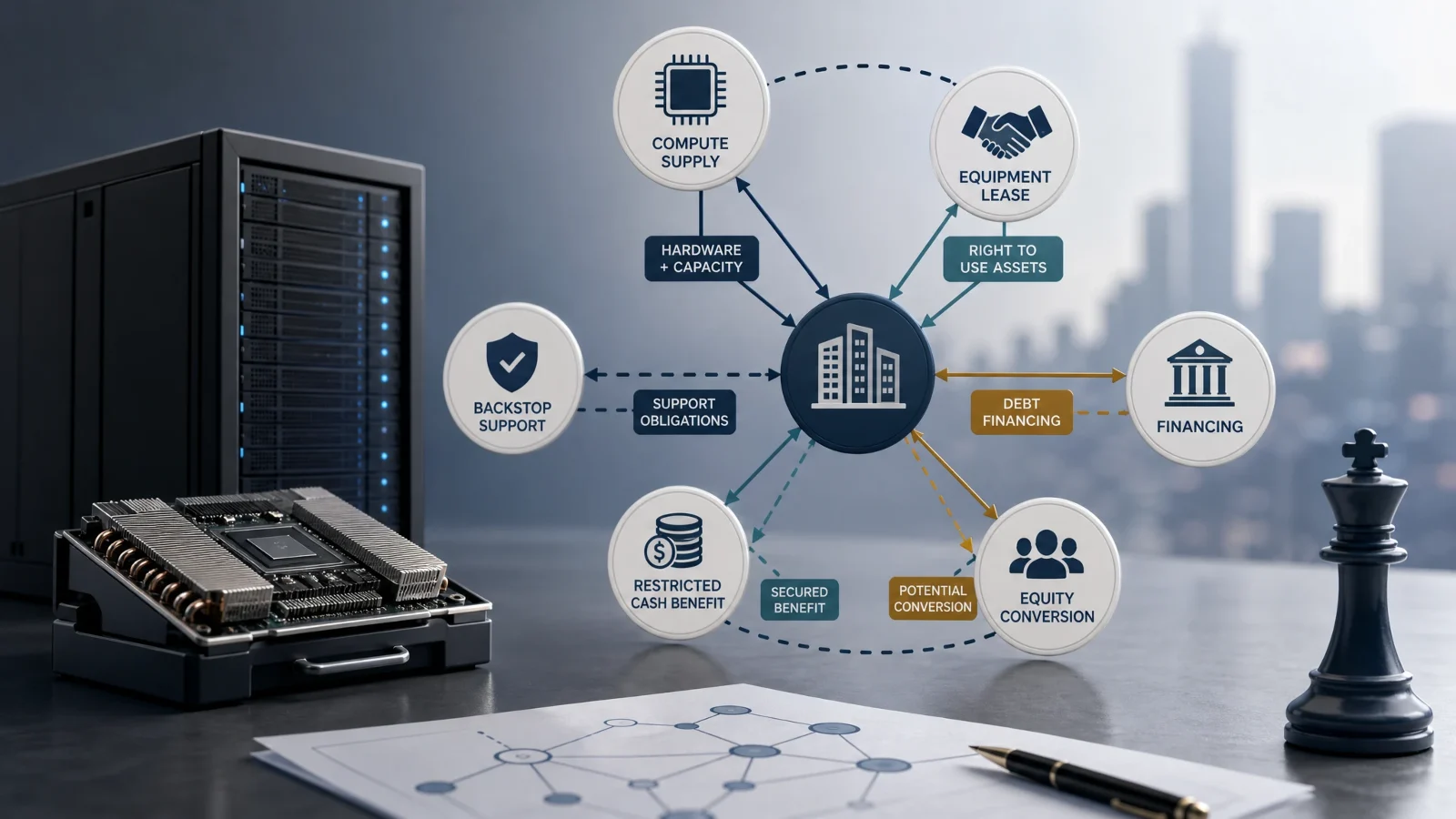
AI-driven data-centre investment is pushing securitisation beyond a simple real-estate story. US issuance now exceeds $25 billion annually, Europe is developing quickly, and recent US regulatory guidance shows why a structure described as “ABS” in the market may not be an asset-backed security under the statutory definition. The deeper lesson is that one facility can contain several different investable rights, contracts, receivables and financing layers.
Read article- Audience
- Credit manager
- Asset
- Receivable
- Stage
- Learn
-
14Guide
When Trade Routes Break, an Invoice Stops Being Just an Invoice
The prolonged disruption around the Strait of Hormuz is pushing up demand for trade finance while banks and development institutions manage tighter limits, higher commodity values and more complex risk. In that environment, an invoice is not enough: the receivable needs a traceable record of the underlying trade, shipment, delivery, acceptance, financing, restrictions and settlement history.
Read article- Audience
- Credit manager
- Asset
- Invoice
- Stage
- Learn
-
15Guide
A Legal Claim, a Funding Right and a Security Are Not the Same Asset
Litigation finance is moving closer to institutional private credit: law-firm loans are being backed by expected fee receivables, portfolios are attracting larger pools of capital, and consumer legal-funding advances have been securitised. The opportunity is real—but so is the need to distinguish the underlying claim from the funding agreement, legal-fee receivable and investment security built around it.
Read article -
16Guide
When an Invoice Becomes Financial Infrastructure: India’s TReDS Experiment
India is pushing MSME invoices deeper into financial infrastructure by requiring central public-sector enterprises to settle MSME purchases through RBI-regulated TReDS platforms. The important lesson is not simply that invoices can be discounted online. It is that financing works better when the invoice, buyer acceptance, current amount, settlement status and financing history are connected as one traceable record.
Read article- Audience
- Credit manager
- Asset
- Invoice
- Stage
- Learn
-
17Guide
Private Credit Has a Data Problem Before It Has a Liquidity Problem
Private credit was built around negotiated loans that could be held for years. In 2026, rising defaults, redemption pressure and a fast-growing secondary market are testing that assumption. When a portfolio needs liquidity, the quality of the underlying loan record suddenly matters just as much as the headline yield.
Read article- Audience
- Asset manager
- Asset
- Debt portfolio
- Stage
- Learn
-
18Guide
The NPL Ratio Is Low—But the Risk Has Not Disappeared
Euro area banks still report historically low aggregate NPL ratios, yet the ECB is seeing rising bankruptcies, vulnerable forborne exposures and a tightening effect from credit-quality indicators. For servicers and portfolio managers, the lesson is clear: problem-loan management depends on current loan-by-loan evidence, not only a headline NPL ratio.
Read article -
19Guide
Energy Performance Is Becoming Credit Information: What Mortgage Lenders Need to Record
The ECB’s July 2026 bank lending survey shows that energy performance and physical climate risk are already influencing housing credit standards and demand. For lenders and asset managers, the practical lesson is that a mortgage-related asset needs a current, source-backed record of the loan, property, valuation, energy performance, physical risk and later changes—not only the original mortgage documents.
Read article- Audience
- Lender
- Asset
- Mortgage-related asset
- Stage
- Learn
-
20Guide
Collateral Is Not Static: What the ECB’s New Climate Factor Means for Secured Credit
The ECB is extending climate factors to certain non-financial corporate credit claims used as Eurosystem collateral. The decision is a useful reminder for lenders: collateral value, borrower risk and supporting evidence can change after origination, so a secured-loan record should remain current and reviewable throughout its lifecycle.
Read article- Audience
- Lender
- Asset
- Secured loan
- Stage
- Learn
-
21Guide
24/5 Markets Still Need a Source of Truth
As markets move towards extended hours and agent-enabled workflows, trusted asset data cannot stop at a field value. It needs source evidence, provenance, permissions, version control and visible human review.
Read article -
22Guide
From Clay Tablets to Asset Passports: Why Trusted Records Still Matter
From ancient clay accounts to digital Asset Passports, the medium has changed but the essential questions remain: who are the parties, what was agreed, which evidence supports it and what changed later?
Read article -
23Guide
Trading Is Not Settlement: The Infrastructure Behind a Market Transaction
Agreeing a transaction is only one step. Asset records, identity checks, clearing, settlement, payment and messaging perform different functions before ownership and obligations can be treated as completed.
Read article -
24Guide
The Missing Layer Between Documents and Markets
Many assets do not reach a market because the rights, restrictions and evidence behind them remain fragmented across documents and systems. A structured Rights Passport can help bridge the gap without pretending that digitisation, tokenisation or a private record automatically creates ownership, transferability or liquidity.
Read article -
25Guide
When Software Can Act, Who Is Responsible? The Case for an AI Agent Passport
As AI agents gain access to tools, data and business workflows, organisations need to know which agent is acting, who controls it, what it may do and which rights apply. An AI Agent Passport could provide a structured, versioned and auditable record without treating the agent as a person or a security.
Read article- Audience
- Investor
- Asset
- Licensing right
- Stage
- Learn
-
26Guide
AI Can Prepare an Asset—But You Make the Final Decision
AI can reduce the work required to organise documents, extract facts, identify gaps and prepare an Asset Passport. DaDepo's direction is to build a controlled asset copilot that supports users without independently signing, registering, listing, transferring or selling an asset.
Read article -
27Guide
Every Second Counts: Reducing the Time from Documents to Buyer Readiness
Value can be lost before an asset ever reaches a buyer—in scattered files, repeated data entry, late discovery of missing evidence and slow review. DaDepo is building a more structured and controlled path from documents to an Asset Passport and relevant market workflows.
Read article -
28Guide
What Is an Intellectual Property Depository—and What Could It Change?
An intellectual property depository can organise IP documents, ownership evidence, licences, assignments and review records. Learn what DaDepo supports today, what may develop next, and why official registries and legal review still matter.
Read article- Audience
- SME
- Asset
- Intellectual property
- Stage
- Learn
-
29Guide
What Does “Finalising” an Asset Package Mean?
Finalising turns an editable asset package into a controlled version prepared for a defined next step. It creates a clearer review baseline, but does not prove legal validity, ownership, value, transferability or settlement.
Read article -
30Guide
Discovery, Negotiation, Execution and Settlement Are Different Stages
Finding an asset, discussing terms, signing a transaction and completing payment or transfer are separate stages. Learn what each stage means, where DaDepo helps today and how the workflow is intended to develop.
Read article -
31Guide
Recording an Asset Is Not the Same as Legal Registration
Creating a structured DaDepo record can make an asset easier to understand, review, share and prepare for its next step. It does not replace an official filing, statutory register, title record or CSD book entry.
Read article -
32Guide
What Can Third-Party Verification—and What Can It Not—Confirm?
A third-party check is only as broad as its defined scope. Learn what identity, registry, signature, financial, valuation and technical checks may confirm—and which conclusions still require separate review.
Read article -
33Guide
Can a Contract-Backed Right Be Used as Collateral? Questions to Resolve First
A contract-backed right may be relevant to secured financing, but its existence does not make it acceptable collateral. Ownership, restrictions, priority, value, enforcement and applicable law all require review.
Read article -
34Guide
Public, Private or NDA-Controlled: Choosing How to Share Information
Different review stages require different levels of disclosure. Learn what may be suitable for public, private or NDA-controlled sharing—and why some sensitive information should not be shared at all.
Read article -
35Guide
From Contract Documents to Structured Data: What Digitisation Changes—and What It Does Not
Turning contracts into structured data can improve search, comparison, traceability and review. It does not automatically prove authenticity, change legal rights, create transferability or make the information correct.
Read article -
36Guide
Transferability Is Not Automatic
A documented right is not automatically transferable. Contract terms, consent requirements, applicable law, competing interests and the type of transaction can all affect whether and how a claim, contract, licence or IP right may move to another party.
Read article -
37Guide
What Makes an Intellectual Property Asset Ready for Review?
An intellectual property asset is easier to review when its scope, ownership history, registrations, licences, restrictions and supporting evidence are organised into a clear and controlled package.
Read article- Audience
- SME
- Asset
- Intellectual property
- Stage
- Evaluate
-
38Guide
Ownership, Licensing and Assignment: What Do the Documents Show?
Ownership, permission to use an asset and transfer of ownership are different legal concepts. Learn which documents may support each position, what reviewers should look for and which questions still require professional assessment.
Read article- Audience
- SME
- Asset
- Licensing right
- Stage
- Learn
-
39Guide
Claim Amount Is Not the Same as Asset Value
A claim may have a stated or calculated amount, but that figure is not automatically its value or likely transaction price. Learn how to distinguish the key figures and present them with appropriate context.
Read article -
40Guide
How to Read a Public Asset Listing Responsibly
Explains what a public asset listing can show, what remains restricted, and why listings should be treated as informational starting points, not legal or investment advice.
Read article -
41Guide
How to Turn Scattered PDFs Into a Buyer-Ready Package
A practical guide to organising scattered PDFs, contracts, invoices, correspondence, and evidence into a clearer package for buyer or reviewer assessment.
Read article -
42Guide
What Is an Asset Passport?
A practical explanation of how an Asset Passport turns scattered documents and key facts into a structured, review-ready overview.
Read article -
43Guide
Invoice Finance Starts With a Complete Evidence Pack
Explains the difference between an invoice and the evidence needed to explain the underlying receivable.
Read article -
44Guide
What Makes a Claim Ready for Buyer Review?
A practical checklist of the documents, chronology, amount support, and gaps to resolve before presenting a claim for buyer review.
Read article
Insights